Subscribe to our Newsletter
SHARE THIS BLOG
The global secondhand and resale market hit $256 billion in 2023, and industry projections put it on track to reach $367 billion by 2029. In the United States alone, the resale market is expected to reach $74 billion. Gen Z and millennial shoppers are driving this growth — more than 40% of Gen Z are active thrifters, and 24% of global consumers now buy secondhand specifically to reduce environmental impact.
If you’re thinking about starting a consignment store, Shopify is one of the strongest platforms to build on. But running a consignment on Shopify isn’t quite the same as running a regular e-commerce store. You need to track which items belong to which consignor, calculate commissions accurately, process payouts on schedule, and give your consignors visibility into their sales.
This guide walks you through every step of launching a consignment business on Shopify — from choosing your niche to automating the financial operations that make or break consignment stores.
What Makes Consignment Different from Regular Retail?
In a traditional retail model, you buy inventory upfront and own it until it sells. In consignment, you don’t own the inventory. Consignors (your vendors) provide the goods, you display and sell them, and you split the proceeds based on an agreed commission rate.
This creates specific operational challenges that regular Shopify stores don’t face:
Commission tracking across dozens or hundreds of consignors. Each consignor may have different commission rates, and you need to track every sale back to the right person. With even 30-50 active consignors, spreadsheet tracking becomes a full-time job.
Payout management on a fixed schedule. Consignors expect regular payments — typically monthly or bi-weekly. You need to calculate what’s owed, account for returns and adjustments, and process payments reliably. Getting this wrong erodes trust fast.
This is one of the biggest operational challenges in consignment. Our guide to automating consignor payouts on Shopify walks through the exact setup, including payment methods, schedules, and threshold configuration.
Consignor communication and transparency. Your consignors want to know how their items are performing. Without a self-service portal, you’ll spend hours answering questions about sales, payouts, and inventory status.
Inventory that you don’t control. Items come and go based on consignor decisions. You need systems to manage consignment periods, handle unsold items, and track what’s in your possession at any given time.
The good news: Shopify’s ecosystem has evolved to handle all of this. But you need the right setup from the start.
Step 1: Choose Your Consignment Niche
The most successful consignment stores specialize. Trying to sell “everything secondhand” puts you in competition with Goodwill, ThredUp, and every other generalist reseller. Instead, pick a niche where you can build expertise, attract dedicated consignors, and command higher commission rates.
High-performing consignment niches on Shopify:
Luxury and designer fashion - Authenticated designer bags, shoes, and clothing. Commission rates of 30-40% are standard. Requires authentication expertise but attracts high-value items and buyers willing to pay premium prices.
Vintage and antique home décor - Mid-century modern furniture, vintage lighting, antique collectibles. Higher average order values and passionate buyer communities. Works especially well with local pickup options.
Children’s clothing and gear - Parents constantly cycling through sizes creates a steady supply of consignors. Items like strollers, car seats, and clothing bundles move quickly. Lower price points but high volume.
Art and handmade goods - Local artists, printmakers, and craftspeople looking for retail presence without running their own store. Artists are natural consignors who produce ongoing inventory. Commission rates vary widely from 20-50%.
Sporting goods and outdoor gear - Seasonal demand creates buying and selling cycles. Ski equipment, cycling gear, and camping equipment hold value well and attract knowledgeable buyers.
When choosing your niche, consider three factors: your existing knowledge (can you spot quality and authenticate items?), local supply (are there enough consignors in your area or online?), and buyer demand (will people search for and pay fair prices for these items?).
Thrift and resale is the most common variation, where you mix donated and bought-outright stock with consigned items in the same shop.
Antique malls and booth rental shops run a related model, where each dealer rents space and pays a cut of what sells.
Step 2: Set Up Your Shopify Store for Consignment
Start with Shopify’s Basic plan at $39/month. This gives you everything you need to launch — an online storefront, payment processing, inventory management, and the ability to install apps that handle consignment-specific features.
Essential store setup steps:
Choose a clean, professional theme. Dawn (free) or Sense (free) work well for consignment stores. Avoid overly branded themes — you want the products to stand out. Make sure your theme supports product filtering by vendor, which is critical for consignment browsing.
Configure your product organization. Set up collections by category (e.g., “Designer Handbags,” “Vintage Furniture”) and use Shopify’s built-in “Vendor” field to tag every product with the consignor’s name or ID. This vendor tagging is what allows multi-vendor apps to track sales and calculate commissions automatically.
Set up your payment processing. Shopify Payments is the simplest option for receiving customer payments. For paying consignors, you’ll need a separate solution — more on this in Step 4.
Create essential pages. Your consignment store needs pages that a regular store doesn’t: a “Consign With Us” page explaining your process and rates, a consignment agreement page, and an FAQ covering topics like payout schedules, item condition requirements, and consignment periods.
Enable Shopify POS if you have a physical location. Seventy-seven cents of every pre-owned apparel dollar is spent in physical stores. If you have (or plan to have) a brick-and-mortar location, Shopify POS syncs your online and in-store inventory automatically.
Step 3: Establish Your Commission Structure
Your commission structure is the foundation of your consignment business. Set it wrong and you’ll either scare away quality consignors or eat into your margins.
Industry-standard commission splits:
General consignment stores typically keep 40-60% of the sale price (consignors receive 40-60%). Luxury consignment tends toward 30-40% store commission on high-value items, while clothing consignment averages 50/50 splits. Art galleries on consignment commonly take 40-50%. For a complete breakdown by industry with benchmarks and tiered structures, see our guide to consignment commission rates.
Factors that affect your commission rate:
The price point of items matters. Higher-value items warrant lower commission rates because your per-transaction profit is still significant. A 30% commission on a $500 handbag ($150) is more than a 50% commission on a $20 shirt ($10).
Your overhead determines your floor. Calculate your monthly costs — rent, Shopify subscription, app fees, packaging, labor - and work backward to determine the minimum commission rate that keeps you profitable.
Competition sets the ceiling. Research what other consignment stores in your niche charge. Luxury resale platforms like The RealReal offer up to 85% payouts on high-value items, while local consignment shops typically offer 40-60%.
Consider tiered commission rates based on sale price, volume, or consignor tenure. For example: 50% store commission on items under $50, 40% on items $50-$200, and 35% on items over $200. This incentivizes consignors to bring you higher-value items.
Whatever structure you choose, make sure your multi-vendor management tool supports it. You need an app that can handle commission rates by vendor, by product, or even by SKU - not just a single global rate.
Step 4: Install a Multi-Vendor Management App
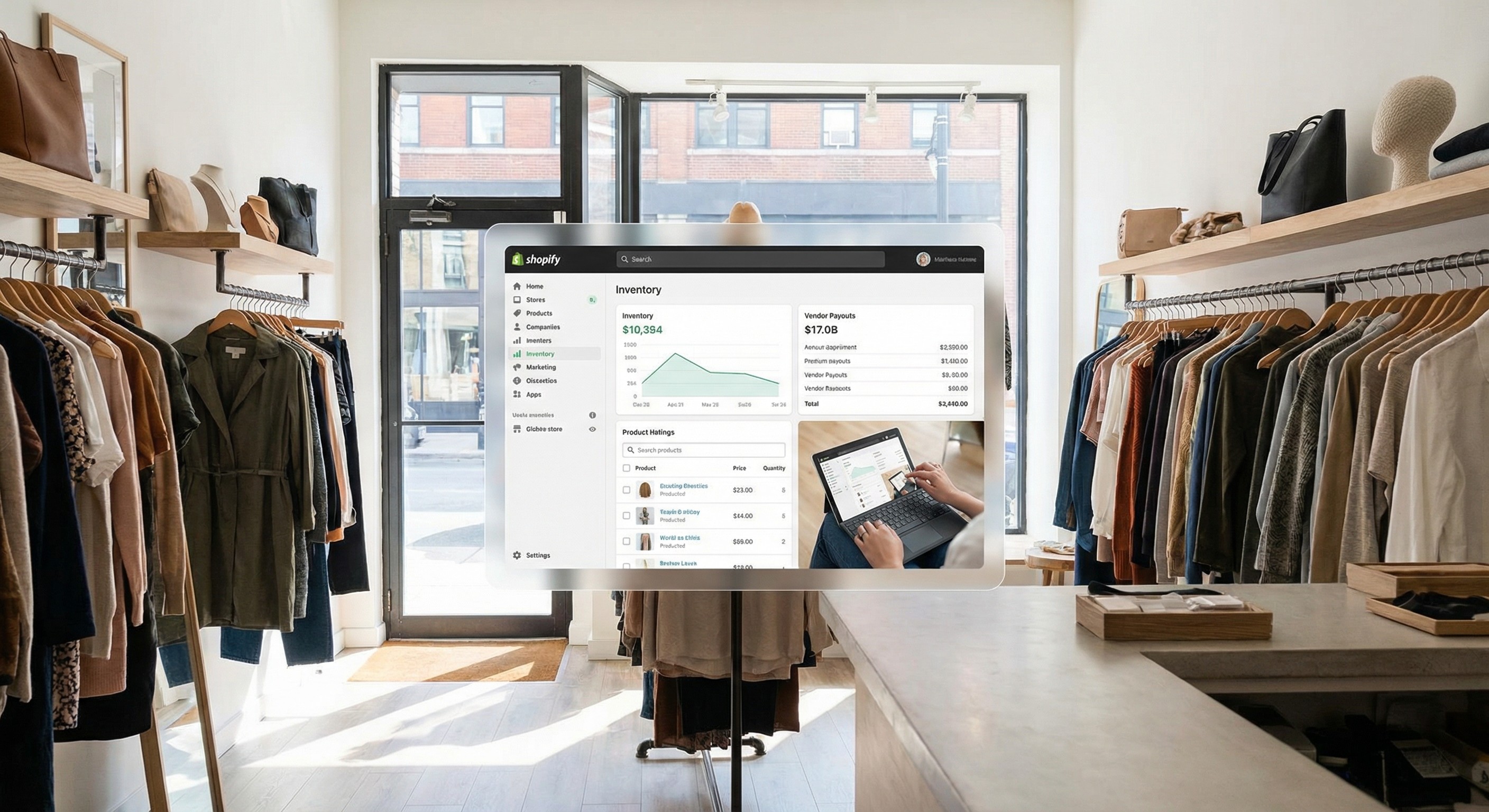
This is the most critical technology decision for your consignment store. The category you’re shopping for is consignment store software: an app that adds consignor tracking, commissions, and payouts to Shopify. Without the right one, you’ll drown in spreadsheets trying to track who owns what, who’s owed what, and when payments are due.
What a consignment-ready multi-vendor app must do:
Flexible commission structures. Set different rates per vendor, per product, or per SKU. Calculate commissions on gross sales, net profit, or cost of items, depending on your business model.
Automated payout calculation and processing. The app should calculate what each consignor is owed based on actual sales, account for returns and adjustments, and ideally process payments directly through PayPal or Stripe.
Vendor portal with self-service access. Consignors should be able to log in, see their sales, check pending payouts, and review inventory status without emailing you. This alone saves hours per week.
Product management by vendors. Allow consignors to submit their own product listings (with your approval), upload photos, and manage their inventory. This distributes the workload and gives consignors ownership of their listings.
Order fulfillment tracking. If consignors ship their own items (common in online-only consignment), the app should allow them to enter tracking information and manage fulfillment status.
Reporting and insights. You need dashboards showing sales by vendor, commission summaries, payout history, and inventory performance. Your consignors need visibility into their own metrics.
PuppetVendors handles all of these requirements natively on Shopify, with plans starting at $49/month for up to 25 vendors. The app supports flat or percentage-based commissions by vendor, product, or SKU, includes automated PayPal and Stripe payouts, provides a white-label vendor portal, and offers product management capabilities that let consignors upload and manage their own listings.
Not sure which consignment app is right for your store? We compared the 10 best consignment software options for Shopify, including native apps, standalone platforms, and lightweight payout tools.
Unlike legacy consignment software like SimpleConsign ($159-$359/month) or Ricochet ($199/month), PuppetVendors is Shopify-native — meaning there’s no clunky integration, no data syncing issues, and no separate system to manage. Everything runs inside your Shopify admin.
If you’re comparing standalone consignment platforms like SimpleConsign against Shopify-native options, read our detailed SimpleConsign vs Shopify + PuppetVendors comparison covering pricing, POS support, and integration depth.
Step 5: Onboard Your First Consignors
With your store set up and your multi-vendor app installed, it’s time to recruit consignors. Your first 10-20 consignors will make or break your launch.
Where to find consignors:
Start with your personal network. Friends, family, and local community members who have quality items in your niche. These early consignors are forgiving of early-stage growing pains and provide authentic inventory for your launch.
Local community groups. Facebook Marketplace groups, Nextdoor, local buy/sell/trade communities, and neighborhood associations. Post about your new consignment store and the opportunity for people to earn money from items they’re not using.
Niche communities. If you’re focused on art, connect with local artist collectives and galleries. For designer fashion, reach out to personal stylists and fashion influencers. For sporting goods, contact local clubs and teams.
Consignment events. Host a “Consignment Day” where people can bring items for evaluation. This creates urgency, builds buzz, and lets you curate inventory quality from the start.
Your onboarding process should include:
A clear consignment agreement covering commission rates, payout schedule, consignment period, item condition requirements, and what happens to unsold items. Have this reviewed by a lawyer — it protects both you and your consignors.
A walkthrough of the vendor portal so consignors know how to check their sales, submit new items, and track payouts. The easier this is, the happier your consignors will be and the less support you’ll need to provide.
Item photography standards and guidelines. Consistent, high-quality photos are essential for online sales. Provide guidelines or offer to photograph items yourself (factor this into your commission rate).
Step 6: Optimize for Online and In-Store Sales
Consignment stores have a unique advantage: the inventory is inherently interesting because every item is different. Lean into this for your marketing.
Online optimization:
SEO-friendly product titles. Include the brand, condition, key features, and relevant keywords. “Vintage Louis Vuitton Speedy 30 — Excellent Condition” will rank and convert better than “Designer Bag.”
Detailed product descriptions. Mention the brand, size, measurements, material, condition (be honest), any flaws, and the original retail price. Secondhand buyers do more research than regular shoppers — give them the information they need to buy with confidence.
High-quality photography. Shoot on a clean background with natural lighting. Include multiple angles, close-ups of labels/authentication marks, and honest shots of any wear or imperfections.
Collection pages by category and brand. Make it easy for shoppers to browse your inventory the way they think — “Women’s Designer Bags,” “Vintage Home Décor Under $100,” “New Arrivals This Week.”
In-store optimization (if applicable):
Keep your POS synced with your online store so inventory is always accurate. Use Shopify POS to process in-store sales and automatically update consignor balances. Display QR codes that link to product pages for items customers want to research or purchase later online.
Step 7: Automate Your Financial Operations
The number one reason consignment stores fail isn’t lack of customers — it’s operational chaos. When you’re manually tracking sales in spreadsheets, calculating commissions by hand, and processing payouts one by one, errors and delays are inevitable. And errors in consignor payments destroy trust.
What to automate from day one:
Commission calculation. Your multi-vendor app should automatically calculate what each consignor is owed based on actual sales data from Shopify. No manual entry, no spreadsheet formulas.
Payout processing. Set up automated payouts through PayPal or Stripe so consignors receive payments on schedule without you manually initiating each transfer. PuppetVendors supports automated payouts through both platforms.
Notifications. Consignors should receive automatic notifications when their items sell, when payouts are processed, and when items are approaching the end of their consignment period. Real-time notifications through email, and if you use tools like Zapier, through WhatsApp, Telegram, or Slack.
Reporting. Generate automated reports showing sales by vendor, commission summaries, payout history, and inventory aging. Use these reports for your own business decisions and share relevant data with consignors through the vendor portal.
The goal is to make your financial operations reliable enough that consignors never have to ask “where’s my money?” If they can log into their portal and see exactly what’s sold, what’s pending, and when their next payout is coming, you’ve built the trust that keeps consignors loyal and sending you their best inventory.
Step 8: Scale Your Consignment Business
Once your store is running smoothly with 20-30 consignors, it’s time to scale.
Grow your consignor base strategically. Add consignors who bring inventory that complements your existing selection rather than duplicating it. Quality over quantity — 50 active consignors with great inventory outperform 200 consignors with mediocre items.
Expand your sales channels. List high-value items on marketplace platforms like eBay, Poshmark, or Depop in addition to your Shopify store. Shopify’s Marketplace Connect app lets you manage multi-channel listings from one dashboard.
Add physical presence if you’re online-only. Pop-up events, trunk shows, and temporary retail spaces let you test physical retail without committing to a lease. Shopify POS makes this seamless since your online and in-store inventory stay synced.
Upgrade your vendor management as you grow. A 30-vendor operation runs differently than a 200-vendor operation. Make sure your multi-vendor app scales with you — look for features like bulk product uploads, staff accounts for your team, and priority support.
Build community around your brand. The most successful consignment stores become destinations, not just transaction platforms. Host events, create content about your niche, feature consignor stories, and build a reputation as the authority in your category.
Common Mistakes to Avoid
Undercharging on commissions. It’s tempting to offer consignors generous splits to attract inventory, but you need margin to cover operations, marketing, and growth. Start with industry-standard rates and adjust based on data, not pressure.
Skipping the consignment agreement. A handshake deal works until it doesn’t. Written agreements protect you when disputes arise about item condition, pricing decisions, or unclaimed inventory.
Manual payout processing at scale. It works with 5 consignors; it breaks at 50. Automate payouts from the beginning so scaling doesn’t create an operational bottleneck.
Ignoring consignment periods. Set clear timelines for how long items stay in your inventory. Items that don’t sell in 60-90 days should be returned, donated (with consignor permission), or marked down. Stale inventory hurts your store’s appeal.
Not investing in photography. Online consignment lives and dies by product photos. Budget time and resources for consistent, high-quality images from day one.
Your Next Steps
Starting a consignment store on Shopify is one of the lowest-risk ways to enter e-commerce. You don’t buy inventory upfront, your consignors are motivated to promote their own items, and the secondhand market is growing faster than almost any other retail segment.
Here’s your action plan:
Pick your niche and research your local market. Set up your Shopify store with a clean theme and proper vendor tagging. Install a multi-vendor management app that handles commissions, payouts, and vendor portals. Create your consignment agreement and commission structure. Recruit your first 10-20 consignors from your personal network and local community. Launch, iterate based on feedback, and scale.
The consignment stores that thrive are the ones that make it easy for consignors to do business with them. That means transparent commission tracking, reliable payouts, and self-service tools that give consignors visibility into their performance. Get these fundamentals right, and your consignment business on Shopify has every advantage it needs to grow.
Ready to launch your consignment store on Shopify? Try PuppetVendors free for 14 days — the multi-vendor marketplace app trusted by 1,000+ Shopify stores for commission management, automated payouts, and white-label vendor portals.