
Subscribe to our Newsletter
SHARE THIS BLOG
Before diving into how it works, let’s start with the basics. A consignment shop sells items for their owners and shares the sale proceeds with them.
What is a consignment shop?
A consignment shop is a store that sells items on behalf of their original owners and splits the sale price with them. The shop doesn’t buy inventory upfront — it displays goods that still belong to the people who brought them in, called consignors, and only pays out once an item actually sells.
The word itself explains the idea: to consign means to entrust something to another’s care. So the consignment meaning is simply this, you hand your item to a shop to sell for you, the shop keeps a commission, and you get the rest when it sells. (“Consignment shop” and “consignment store” mean exactly the same thing.)
How do consignment shops work?
Every consignment shop runs on the same basic cycle, whether it sells designer handbags or mid-century furniture:
Intake. A consignor brings in items. The shop inspects them, decides which to accept, sets a price, and logs each piece against that consignor.
The agreement. Both sides sign a consignment agreement covering the commission split, the payout schedule, and what happens to items that don’t sell.
Display and sale. Items go on the floor (or online) while ownership stays with the consignor.
The split. When an item sells, the shop keeps its commission: commonly 40–60%, and credits the rest to the consignor.
Payout. The shop pays consignors on a set schedule, often monthly, or offers store credit (usually at a higher rate).
Unsold items. After an agreed window, unsold goods are returned, donated, or marked down.
The seller’s view of this is simple: drop off items, collect a check later. The owner’s view is where it gets interesting — because the shop is running that entire cycle for hundreds of consignors at once.
Consignment shop vs thrift store
This is the comparison most people are really after, and the difference comes down to one thing: who owns the inventory.
A thrift store owns its stock outright. Goods are usually donated (think charity shops), and the store keeps 100% of every sale.
A consignment shop never owns its stock. Items belong to consignors until they sell, and the money is shared.
That single difference shapes everything. Because consignment shops only earn when an item sells, they curate carefully and accept quality pieces they’re confident will move — so they tend to be more selective, better organized, and priced higher than thrift stores. A related model, the resale or buy-outright store, pays sellers cash on the spot and then owns the goods. Plenty of shops blend all three under one roof.
Consignment vs wholesale
Wholesale is the opposite arrangement to consignment. In wholesale, the store buys inventory outright from a supplier at a discount, owns it immediately, and keeps 100% of whatever it sells for — but it carries all the risk: unsold stock is money already spent. In consignment, the store never buys the inventory. It pays the consignor only after a sale, so its cash is never tied up in product that might not move.
The trade-off is margin versus risk. Wholesale can earn a bigger margin per item because the store bought low, but it gambles capital on demand it can’t be sure of. Consignment earns a smaller cut per sale (the commission) but risks nothing on inventory. Many shops run both: consignment for one-of-a-kind or higher-value pieces, wholesale or buy-outright for reliable, fast-moving stock.
Thrift stores work differently: they own most of their stock outright or take it as donations, so there’s no consignor to pay. Stores that do both need thrift store software that can tell the two apart.
How a consignment shop actually makes money
Here’s the part most guides skip, because they’re written for sellers rather than owners.
A consignment shop’s revenue is its commission: the slice it keeps from each sale. Take 40% on a store averaging $30,000 in monthly sales and that’s $12,000 in gross margin, earned without spending a dollar buying inventory. That’s the whole appeal of the model for an owner: you stock a full store using other people’s goods, and your cash isn’t tied up in unsold product. Low upfront risk is exactly why consignment is a popular way to open a retail business.
But the economics only work if the operations behind them are tight. The shop has to know, at any moment, which item belongs to which consignor, what it’s priced at, whether it’s sold, and how much each consignor is owed. Multiply that across a few hundred consignors and thousands of items, and the “simple” commission model becomes a bookkeeping problem.
The hard part: tracking consignors, splits, and payouts
Ask anyone who runs a consignment store what actually eats their week, and it won’t be selling. It’s the back office:
Attribution: every item has to stay tied to the right consignor from intake to sale.
Splits: each sale has to calculate the correct commission, which may differ by consignor, category, or item age.
Payouts: consignors expect accurate, on-time payments, often monthly, across the whole roster at once.
Unsold inventory: items nearing the end of their window need to be flagged for markdown, return, or donation.
Done on spreadsheets and manual bank or PayPal transfers, this is where hours disappear and errors, and consignor disputes, creep in. It’s the single biggest operational reason consignment shops outgrow a spreadsheet.
This is the problem consignment software exists to solve: tie every item to its consignor automatically, calculate splits at the point of sale, and run payouts for the entire consignor base in one batch instead of one transfer at a time. For a store on Shopify, that means running the shop floor, the online store, commissions, and payouts from a single system, so the owner spends time curating inventory instead of reconciling it.
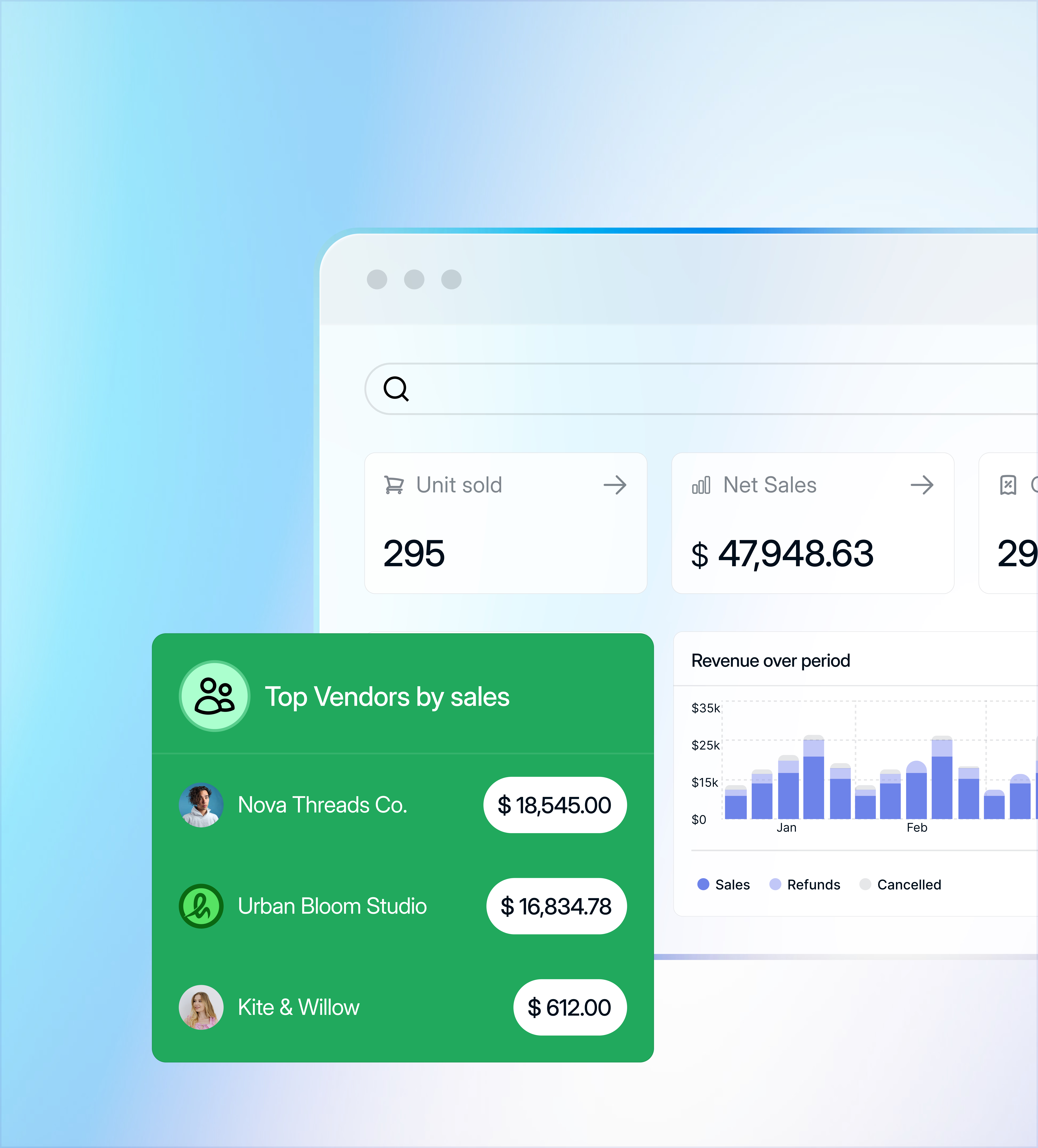
Puppet Vendors Consignment software automates consignor tracking, commission splits, and payouts, so you can manage your entire business from one place instead of juggling spreadsheets.
Thinking of opening a consignment shop?
The consignment model is one of the most accessible ways into retail: you don’t tie up capital in inventory, you sell what other people already own, and you take a healthy cut of every sale. The catch is operational, not financial — the shops that thrive are the ones that keep consignor tracking, splits, and payouts clean from day one.
If that’s a business you’d want to run, the practical next step is deciding how you’ll handle that back office before you open the doors.
Frequently asked questions
What is the meaning of consignment? Consignment means entrusting your items to a shop to sell on your behalf. You keep ownership until the item sells; the shop takes a commission and pays you the rest.
How do consignment shops work? Owners accept items from consignors, price and display them, and split the proceeds when they sell — typically keeping 40–60% as commission and paying consignors on a set schedule.
What’s the difference between a consignment shop and a thrift store? A thrift store owns its (usually donated) inventory and keeps all the proceeds. A consignment shop sells items owners still own and shares the money with them.
How do consignment shop owners make money? Through commission on each sale, without buying inventory upfront — which keeps startup risk low but makes accurate consignor tracking and payouts essential.
Is opening a consignment shop a good business? It can be, because you don’t finance inventory. Success depends on curation and on managing consignors, commissions, and payouts efficiently as the store grows.